

No matter how many years of driving experience you accumulate, the sudden jolt and deafening crash of a vehicle collision can leave even the most composed motorists completely disoriented. In the immediate aftermath, an overwhelming surge of adrenaline floods your system, clouding analytical judgment just when quick, precise decision-making is essential. Taking a breath and focusing on a systematic, prioritized checklist protects your health, establishes clear accountability, and shields your financial well-being down the road.
Prioritizing Physical Safety and Scene Security

Check for Injuries and Stabilize Vehicle Occupants
Before making any movement to exit your vehicle, take five to ten seconds to run an internal inventory of your physical state. Gently rotate your neck, wiggle your toes, move your fingers, and identify any sharp pains, numbness, or tingling sensations that could indicate trauma. Once you confirm your own mobility, turn your attention to the passengers traveling with you.
- Carefully evaluate each passenger verbally, asking specific questions like where they feel pain rather than a generic inquiry.
- Avoid moving any occupant who complains of intense neck stiffness, localized back agony, or significant numbness, unless a secondary hazard such as fire makes immediate evacuation mandatory.
- Scan the exterior environment for hazards such as downed utility lines, leaking fuel, or approaching traffic before releasing your seatbelt.
- Place your vehicle transmission firmly in park and engage the emergency parking brake to eliminate accidental roll-off on an incline.
Move Beyond Active Lanes and Activate Emergency Signals
Secondary impacts represent one of the most hazardous threats on busy multi-lane highways and high-speed thoroughfares. If the vehicles remain drivable and no catastrophic injuries prevent movement, navigate slowly toward the shoulder or an adjacent frontage lane. Doing so clears traffic flow and drastically reduces the odds of an approaching motorist plowing into stationary wreckage.
- Switch on your emergency hazard flashers immediately to alert approaching traffic of an active road obstruction.
- If conditions permit and you carry emergency equipment, deploy reflective triangles or flare beacons roughly one hundred paces behind the vehicle.
- Remain behind roadside barriers or standing well up on the highway embankment rather than loitering near the travel lanes.
- Keep your headlights illuminated during night incidents or foul weather conditions to make the scene visible from distance.
Establishing Official Records and Involving Authorities

Summon Law Enforcement and Emergency Responders
Regardless of whether an impact appears minor, summoning law enforcement to the scene remains critical. A formal police accident report serves as the unbiased backbone for subsequent insurance adjustments and legal proceedings. Disagreements regarding signal colors, right of way, and vehicle speeds often arise weeks later, making contemporary documentation indispensable.
When coordinating with the dispatch operator, articulate the precise intersection, highway mile marker, direction of travel, and any visible hazards. Once officers arrive, communicate the chronological sequence of events without speculation, emotional embellishment, or premature admissions of fault. If you experienced trauma, seeking counsel from a seasoned auto accident attorney can help clarify legal obligations while protecting your rights during the investigative process.
- Request the badge numbers, full names, and primary precinct station of all responding officers on scene.
- Secure the official police incident or report tracking number prior to the departure of law enforcement units.
- Refrain from discussing personal fault or apologizing to other motorists, as casual statements can be misconstrued as liability.
- Confirm whether medical personnel need dispatching, even if physical pains seem minor at first glance.
Secure Thorough Photographic and Video Evidence
Smartphones serve as exceptionally powerful documentation tools in the wake of an accident. Visual evidence captured prior to moving vehicles or clearing debris often reveals tire friction marks, vehicle resting angles, fluid puddles, and road gouges that tell a definitive story. Capturing these details promptly prevents critical facts from vanishing once cleanup crews clear the road.
Walk around the entire perimeter of the scene, snapping high-resolution photographs from multiple perspectives, distances, and elevations. Capture wide-angle vistas showing street signs, traffic lights, construction markers, and weather limitations alongside tight close-ups of mechanical damage. Retaining records of damaged components aids when sourcing specialized auto parts for proper restoration work.
- Photograph the complete license plates, registration stickers, and vehicle identification numbers of all cars involved.
- Record the visible tread condition of all tires and any pre-existing mechanical damage visible on both vehicles.
- Document surrounding environmental variables, including road surface dampness, loose gravel, obscured street signage, and sun glare.
- Capture close-up details of interior cabin deployment, including deployed airbags, shattered glass, and jammed seatbelts.
Managing Essential Information and Third-Party Witnesses
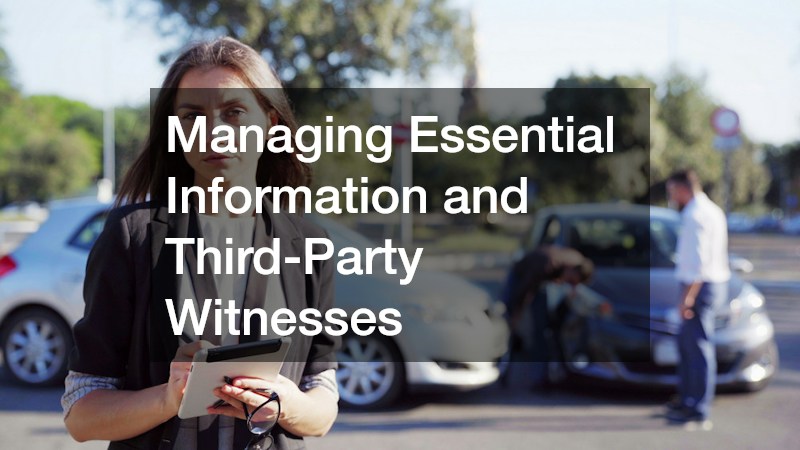
Exchange Comprehensive Details With Involved Drivers
Communicating with other motorists following a wreck demands professional restraint and focused composure. Tensions run high, and confrontations can escalate swiftly if accusations begin flying between parties. Restrict your conversation strictly to exchanging essential contact, vehicle, and coverage credentials.
- Collect the full legal name, current residential address, personal phone number, and email address of each driver.
- Write down the specific policy numbers, carrier names, and direct claims phone lines for involved auto insurance agencies.
- Verify whether the vehicle operator matches the registered owner named on the vehicle documentation papers.
- Transcribe the vehicle make, model, model year, exterior color, and registration plate identification accurately.
Gather Independent Bystander Accounts and Commercial Surveillance
Neutral bystanders provide substantial value when reconstructing disputed traffic incidents. Pedestrians, cyclists, and uninvolved motorists traveling behind the collision possess objective viewpoints free from financial stakes. In many urban environments, adjacent retail stores, fuel stations, and private doorbells maintain exterior surveillance cameras that inadvertently film the entire event.
- Inquire politely with lingering witnesses if they observed the collision, noting their contact names and telephone numbers.
- Inquire whether any nearby motorists captured the collision using an integrated forward-facing dashcam system.
- Note specific retail establishments, intersections, or residential buildings that possess surveillance lenses directed toward the street.
- Request that adjacent storefront managers preserve security camera archives before automatic system resets overwrite the data.
Navigating Medical Needs and Physical Recovery

Undergo a Professional Medical Evaluation Promptly
One of the costliest oversights an individual can commit following an impact is bypassing professional medical evaluation. High-speed collisions release massive forces that twist human anatomy in unnatural directions, often concealing inner injuries behind a shield of adrenaline and cortisol. Common injuries such as cervical hyperextension, internal bleeding, micro-tears in muscular tissue, and closed-head concussions may present minimal outward symptoms initially.
Consulting an emergency physician, urgent care doctor, or orthopedic specialist within twenty-four to forty-eight hours establishes an unbroken record connecting your physical symptoms to the accident. When injuries necessitate extensive rehabilitation or long-term therapeutic care, working alongside reputable personal injury lawyers ensures your medical treatments receive proper consideration from claims adjusters.
- Describe every physical symptom, ache, or stiffness to medical providers, regardless of how minor it appears.
- Retain digital copies of all discharge instructions, physical activity limitations, and diagnostic scan reports.
- Adhere diligently to all scheduled physical therapy appointments and prescribed medication regimens.
- Maintain a personal daily journal documenting pain levels, mobility restrictions, and lost work capabilities.
Track All Out-of-Pocket Medical Expenditures
Reimbursement claims demand exhaustive financial documentation to validate every penny requested from insurer reserves. Prescription receipts, copay slips, durable medical equipment costs, and transportation expenditures related to medical appointments add up rapidly. Failing to save physical or electronic receipts often results in adjusters denying legitimate out-of-pocket costs.
- Dedicate a specific physical folder or digital drive for storing medical invoices, therapy receipts, and pharmacy bills.
- Track mileage driven to doctor offices, diagnostic imaging centers, and physical rehabilitation facilities.
- Request formal wage-loss statements from your employer verifying missed hours and lost earnings due to recovery.
- Avoid posting physical activities or fitness updates on social media platforms while receiving medical treatments.
Handling Vehicle Recovery, Appraisal, and Restoration
Organize Safe Towing and Secure Vehicle Storage
Unless damage is strictly cosmetic and your vehicle remains safe to operate, you will need professional flatbed towing from the scene. Tow operators dispatched by municipal authorities frequently transfer disabled cars to private impound lots that assess daily storage fees. Knowing where your vehicle is headed prevents unexpected storage expenses from accumulating over the weekend.
Take time to review paperwork thoroughly before authorizing a driver to hook up your vehicle. Clarify destination options, tow costs, and drop-off protocols with your motor club or roadside provider. If your vehicle suffered structural damage, directing the tow driver to an accredited auto collision center ensures that certified technicians evaluate the frame integrity under controlled conditions.
- Empty your car of all personal valuables, garage door openers, toll transponders, and essential identity documents.
- Verify the specific commercial storage facility address where the tow operator plans to deliver your automobile.
- Request a signed itemized receipt detailing flat fees, hook-up charges, and mileage estimates before authorizing service.
- Take detailed photos of the vehicle attached to the tow truck to verify that no secondary towing damage occurs.
Select Qualified Repair Professionals and Inspect Restorations
Modern automotive construction relies on specialized high-strength steels, lightweight aluminum alloys, and intricate sensor arrays that require calibrated tools to repair. You possess the legal right to choose where your automobile undergoes repair work rather than accepting arbitrary mandates from third parties. Thoroughly vet prospective facilities based on certifications, factory-approved procedures, and customer satisfaction ratings.
Modern safety suites require precise dynamic and static recalibrations whenever body panels, bumpers, or glass assemblies undergo removal. Selecting a licensed repair shop that manages advanced collision services guarantees that lane-assist cameras and adaptive cruise radar work reliably when you return to the road. Ask questions about parts sourcing, demanding clear distinctions between original components and aftermarket alternatives.
- Confirm whether technicians hold independent certifications such as I-CAR Platinum status or ASE credentials.
- Inquire whether structural frame straightening occurs using computer-controlled three-dimensional measuring systems.
- Request a complete written warranty on structural metalwork, mechanical assemblies, and applied refinish coatings.
- Check that all computer diagnostic fault codes are cleared and documented before picking up the finished vehicle.
Protecting Cosmetic and Functional Exterior Components
Address Damaged Automotive Glazing and Sensors
Modern windshields perform roles far beyond shielding occupants from wind, rain, and road debris; they serve as critical structural elements that support the roof during rollover events and guide passenger airbag deployment. Furthermore, advanced driver-assistance systems depend directly on forward-facing optical cameras mounted behind the top center of the glass. Even small star fractures or hairline cracks weaken structural safety and distort sensor accuracy.
Prompt attention to glass damage avoids catastrophic failures during sudden temperature shifts or minor road vibrations. Scheduling rapid windshield repair restores structural clarity, eliminates stress fractures, and ensures advanced optical safety components operate as designed without having to replace the entire glass panel.
- Inspect the perimeter of the glass for micro-fractures, delamination, or edge breaks after an impact.
- Inquire whether rock chip resins can restore structural durability without distorting the optical view.
- Ensure camera calibration routines are executed if your vehicle uses forward collision mitigation systems.
- Verify that the glass replacement meets or exceeds original automotive manufacturer specifications.
Restore Protective Exterior Paint Layers
Once structural repairs and sheet metal restoration are finished, restoring the vehicle exterior preserves trade-in value and shields bare metals from corrosion. Collisions often introduce micro-scratches, scuffs, and abrasions to clear coats that expose delicate base layers to environmental wear, road salts, and sun damage. A meticulous paint correction and refinish process restores depth and shine to repainted body sections.
Vehicle owners looking for long-lasting protection often apply an advanced ceramic coating across freshly blended paint finishes. This liquid polymer bonds with factory clear coats to establish a durable hydrophobic layer that repels water, prevents chemical etching, and keeps vehicles looking clean with minimal maintenance.
- Allow newly applied paint finishes to cure according to the body shop instructions before applying sealants.
- Inspect the completed paint surfaces under direct lighting to check for color matching and clear coat defects.
- Wash the vehicle using balanced pH car shampoos and microfiber towels to avoid scratching the finish.
- Protect vehicle paint against acid rain, tree sap, and road grime by maintaining a protective barrier.
Preserving Financial Equity and Managing Claims
Document Diminished Value and Long-Term Losses
Even when an exceptional collision facility restores your automobile to pre-accident visual condition, the vehicle vehicle history report will permanently reflect an accident record. When you eventually trade in or sell the automobile, prospective buyers will likely offer less money due to this incident history. This loss in resale value represents real financial depreciation that can often be claimed from the at-fault driver’s insurance carrier.
- Order an independent professional appraisal to determine your vehicle market value before and after the wreck.
- Document that structural repairs were executed using OEM standards to demonstrate high restoration quality.
- Research comparable recent regional sales of clean-title vehicles versus identical models with accident histories.
- Present a formal diminished value demand letter directly to the adverse party’s liability adjuster.
Compare Quality Repair Estimates Across Regional Providers
Insurance appraisers are tasked with minimizing claim payouts, which can lead to initial repair estimates that overlook underlying damage. Hidden mechanical faults, cracked subframes, and bent suspension linkages are often discovered only after technicians disassemble outer bumper covers and fenders. Gathering independent estimates provides an objective benchmark for the scope and cost of necessary repairs.
Take your vehicle to multiple repairers for detailed inspections before authorizing work to begin. Obtaining estimates from shops that perform local auto collision repairs gives you the leverage needed to negotiate for comprehensive, safe repairs rather than cut-rate patches that compromise vehicle safety down the road.
- Request an itemized estimate separating body labor, paint supplies, frame rack hours, and diagnostic scans.
- Check whether replacement components are categorized as original manufacturer, reconditioned, or aftermarket parts.
- Ensure the facility includes complete pre-repair scanning procedures to identify hidden electrical trouble codes.
- Secure written authorization stating that supplemental claims will be filed if hidden damage is uncovered during tear-down.
Legal Representation and Long-Term Strategy
Understand When Legal Counsel Becomes Invaluable
Not every fender bender requires legal intervention, but complex collisions with catastrophic vehicle damage, disputed fault, or serious bodily injuries warrant professional guidance. Insurance carriers employ experienced adjusters and legal teams whose primary duty is minimizing company payouts. Navigating settlement negotiations on your own can result in accepting offers that fail to cover ongoing medical treatments or long-term vehicle depreciation.
Retaining an experienced legal advocate levels the playing field and protects your rights throughout the process. When substantial losses occur, consulting with the best car crash attorney ensures that liability investigations, medical assessments, and claim negotiations are managed by an experienced professional focused on maximizing your recovery.
- Seek legal representation immediately if the other driver’s insurer denies clear liability or offers a quick, low settlement.
- Rely on your legal counsel to handle all verbal and written communications with adverse insurance adjusters.
- Ensure that future medical requirements, surgical interventions, and lost earning potential are fully calculated before settling.
- Protect yourself against debt collection issues by coordinating with medical providers through formal letters of protection.
Experiencing an automobile crash is an unnerving ordeal that shakes your sense of security behind the wheel. The journey from the initial impact to picking up your fully restored vehicle demands patience, meticulous documentation, and informed decision-making. By maintaining composure, prioritizing physical health, collecting thorough evidence, and partnering with dedicated automotive and medical professionals, you can successfully navigate these challenges. Approaching every step systematically transforms a chaotic ordeal into a structured, manageable recovery, helping you return to the road with confidence.